OUR past EVENTS
CENCE at the 2027 Canadian Society for the Study of Education (CSSE) Conference
We are very excited about the founding of CENCES as a Special Interest Group (SIG) of the Canadian Association for the Foundations of Education (CAFE), which is a constitutive association of the Canadian Society for the Study of Education (CSSE)/La Société Canadienne pour L’étude de lLéducation (SCÉÉ). The main opportunity for CENCES members to come together will be a CENCES program at the annual CSSE conference each year. CSSE and CENCES allow for online presentations.
This event will be held as part of the 2027 CSSE Conference at the University of Saskatchewan, June 5-9, 2027.
CSSE’s Call for Proposals (CFP) has a proposal deadline of 14th October, 2026. We encourage proposals that engage with the conceptual and empirical study and practice of contemplative education in formal and non-formal educational settings. Graduate students, early career scholars, and established colleagues are all warmly encouraged to submit papers, panels/symposia, roundtables and posters.
Submit your proposal here: https://event.fourwaves.com/csse2027scee
Well-Being and Spirituality in Formal Education
Hybrid Symposium, Saturday, 30 May 2026, 9:00 to 15:00 (Central Time)
Education Building, University of Manitoba and online via Zoom
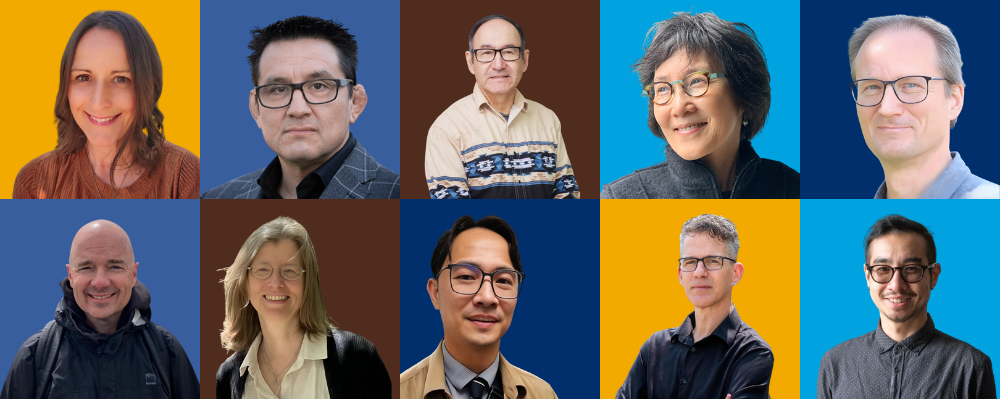
The day-long Symposium will feature three panels with time for audience members to engage with the ten panelists and other participants in the themes of the three panels.
Featured Panelists:
- Heesoon Bai (Simon Fraser University)
- Frank Deer (University of Manitoba)
- Claudia Eppert (University of Alberta)
- Thomas Falkenberg (University of Manitoba)
- Fortunato Lim (Seven Oaks School Division, Winnipeg)
- Michael Link (University of Winnipeg)
- Remy Low (The University of Sydney, Australia)
- Kenneth MacKendrick (Department of Religion, University of Manitoba)
- Kathryn Morog (University of Manitoba)
- Blair Stonechild (First Nations University of Canada)
For more details on the event, please visit: https://wellbeinginschools.ca/events/upcoming-events
Education at the Crossroads: Contemplative and Affective Turns in Mental Health Response
Virtual Symposium, Thursday, April 16, 2026, 3:30pm to 5pm (Pacific Standard Time)
Dr. Renata Cueto de Souza, Simon Fraser University
Dr. Charles Scott, Simon Fraser University
Please join us for a timely dialogue as contemplative scholar Renata Cueto de Souza engages with Charles Scott and webinar participants in considering the emergence of the contemplative turn in post-secondary education amid rising concerns of student mental health. Cueto de Souza argues that recent contemplative educational praxis requires more rigorous conceptual foundations that critically examine assumptions embedded in notions such as self, inner, and inwardness. She invites exploration of alternative conceptual pathways by engaging the scholarship on the affective turn in phenomenology, noting its reception within continental philosophy. You can find more of Renata’s work here: https://summit.sfu.ca/libraries/pdf.js/web/viewer.html?file=%2F%2Fsummit.sfu.ca%2F_flysystem%2Ffedora%2F2025-12%2Fetd24079.pdf
Link to Recording: https://youtu.be/Smywe_xVqHU
Contemplative Engagement and the New Sadness
Virtual Symposium, Thursday, February 19, 2026, 3:30pm to 5pm (Pacific Standard Time)
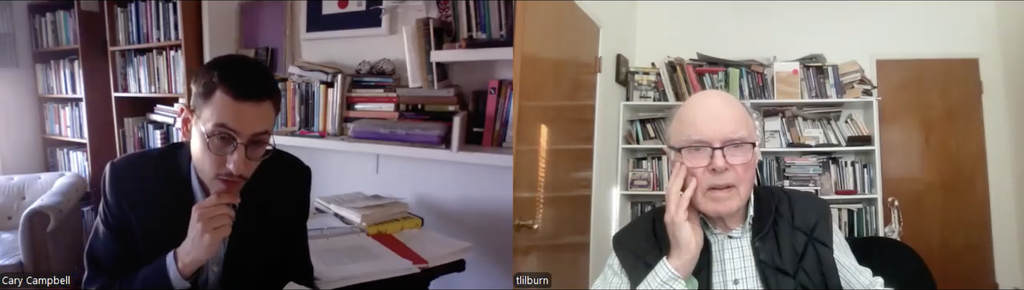
Dr. Tim Lilburn, University of Victoria
Dr. Cary Campbell, Simon Fraser University
Renowned essayist and poet Tim Lilburn engages in dialogue about his recent book Numinous Seditions: Interiority & Climate Change with long-time interlocutor educational scholar Cary Campbell. In this work, Tim Lilburn articulates and describes a new sadness that we are only beginning to confront in this time of social and environmental unravelling. As he writes, “There is no antinomy between a practice of sadness and an engaged politics at certain times of severe crisis.” In this conversation, Lilburn discusses six enabling practices for handling this “new sadness” in ourselves and others. As he observes, addressing “new sadness, its anxieties and despairs, is palliative work, but it turns out to be a polis, an economics, a nation, a way of life in-formation.”
Link to Recording: https://youtu.be/1nMkZTGkC-0
“There is No Way to Peace”: Contemplative Engagement and Inner Work
Virtual Symposium, Thursday, December 4th, 2025, 3:30pm to 5pm (Pacific Standard Time)
Thomas Falkenberg, University of Manitoba
Daniel Vokey, University of British Columbia
The quote “There is no way to peace, peace is the way” (attributed to the American Christian pacifist and labour activist Abraham Muste, the Indian Hindu non-violent, anti-colonial activist Mohandas Ghandhi, and the Vietnamese Buddhist monk/peace activist Thich Nhat Hanh) suggests that how we get to a state of affairs is not independent of what that state is to be. With this idea of relating how and what in mind, this webinar responds to the question, “What is the relationship between contemplative engagement– understood as social engagement– and the personal practice of inner work. Please join us as Thomas Falkenberg and Daniel Vokey engage in dialogue with each other and with us in order to discusses the importance of inner work as a central aspect of the how for contemplative engagement with reference to different contemplative and intellectual traditions.
Wisdom Traditions in Support of Indigenization and Reconciliation
Virtual Symposium,Thursday, June 19th, 2025, 3:30pm to 5pm (Pacific Standard Time)
Frank Deer, University of Manitoba
Dr. Denise Findlay, Kweykway Consulting
Indigenization of curriculum and pedagogy is notable in the Canadian K-12 educational context. In this symposium, the Canadian Educational Network for Contemplative Engagement (CENCE) invites you to join us with Frank Deer, a Kanien’kehá:ka educator and Professor of Indigenous Education, in dialogue with Skwxwú7mesh scholar-educational practitioner Denise Findlay. This session is opened by Jeannie Kerr and facilitated by Heesoon Bai. Within their dialogue, Drs. Deer and Findlay engage with the complexities of far- ranging issues such as: the absence of the sacred and predominance of exploitative and violent ways of being in the world; the neglect of wisdom cultivation (in contrast to knowledge accumulation) in education and the consequences of such neglect; colonial blind spots around Indigenization and Reconciliation – what’s misleading, what’s missing, and a good way forward; and Indigenous spiritual teaching and contemplative education. The session will provide an opportunity for engagement with the presenters.
What Might Contemplation Offer at this Time in History: Education, Uncertainty, and Activism
Virtual Symposium, Tuesday, April 8, 2025, 3:30pm to 5pm (Pacific Standard Time)
This time in history is marked with uncertainties. While uncertainty is not limited to our current time, we can recognize a certain global instability emerging from climate change, violent conflicts, and changing relationships between what have been considered allied countries. These troubles can be seen to be rooted in violent ways of being in the world that have long been the subject of critique and forms of activism. What might this all mean for what we are doing in Canadian schools? What might contemplative practice offer?
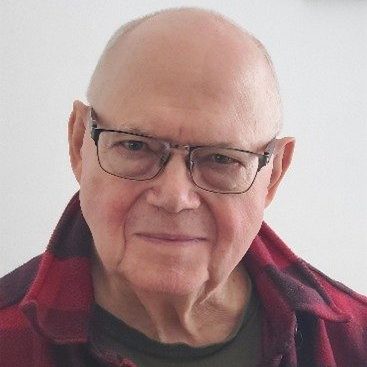
In this webinar, we engage with Derek Rasmussen in dialogue with David Smith and Heesoon Bai as they engage in dialogue with each other and us about the possibilities for contemplative practice in education in our current time. Moderated by Dr. Jeannie Kerr.

Simon Fraser University
University of Alberta
Simon Fraser University
Negotiating Contemplative Practices in Education: Understanding and Addressing Modernity’s Limiting Assumptions
Virtual Symposium, Wednesday, December 4th, 2024, 3:30 to 5pm (Central Standard Time)
From preschool to university, the formalized settings wherein public education is enacted in Canada have been directed through the assumptions of Euro-Western modernity. The prescribed ways of knowing, being, and doing in public education have thus been heavily influenced by an emphasis on rationalist forms of thinking as the authorized way to know and make meaning, resulting in constraints on meaningful educational experience. Traditions of thoughts and practice that expand and challenge these dominant education norms and ways of doing/being through practices of embodiment, mindfulness, spiritual resonance, arts, etc. have the capacity to meaningfully redress dominant forms of education.
In this symposium, the Canadian Educational Network for Contemplative Engagement (CENCE) invites you to join us with presenters Frank Deer and Claudia Eppert and engage in dialogue to explore the limits, possibilities and opportunities to enrich forms of knowing, being, and doing in educational settings.
University of Manitoba
University of Alberta